
Artificial Intelligence (AI) has rapidly become an integral part of our daily lives, from the way we shop online to how we interact with smart devices. Despite its widespread presence, there are still many misconceptions surrounding AI that often cause confusion, fear, or unrealistic expectations. Understanding the common myths about artificial intelligence is essential for anyone looking to navigate the modern technological landscape. In this article, we will explore and debunk some of these myths in a clear and approachable way.
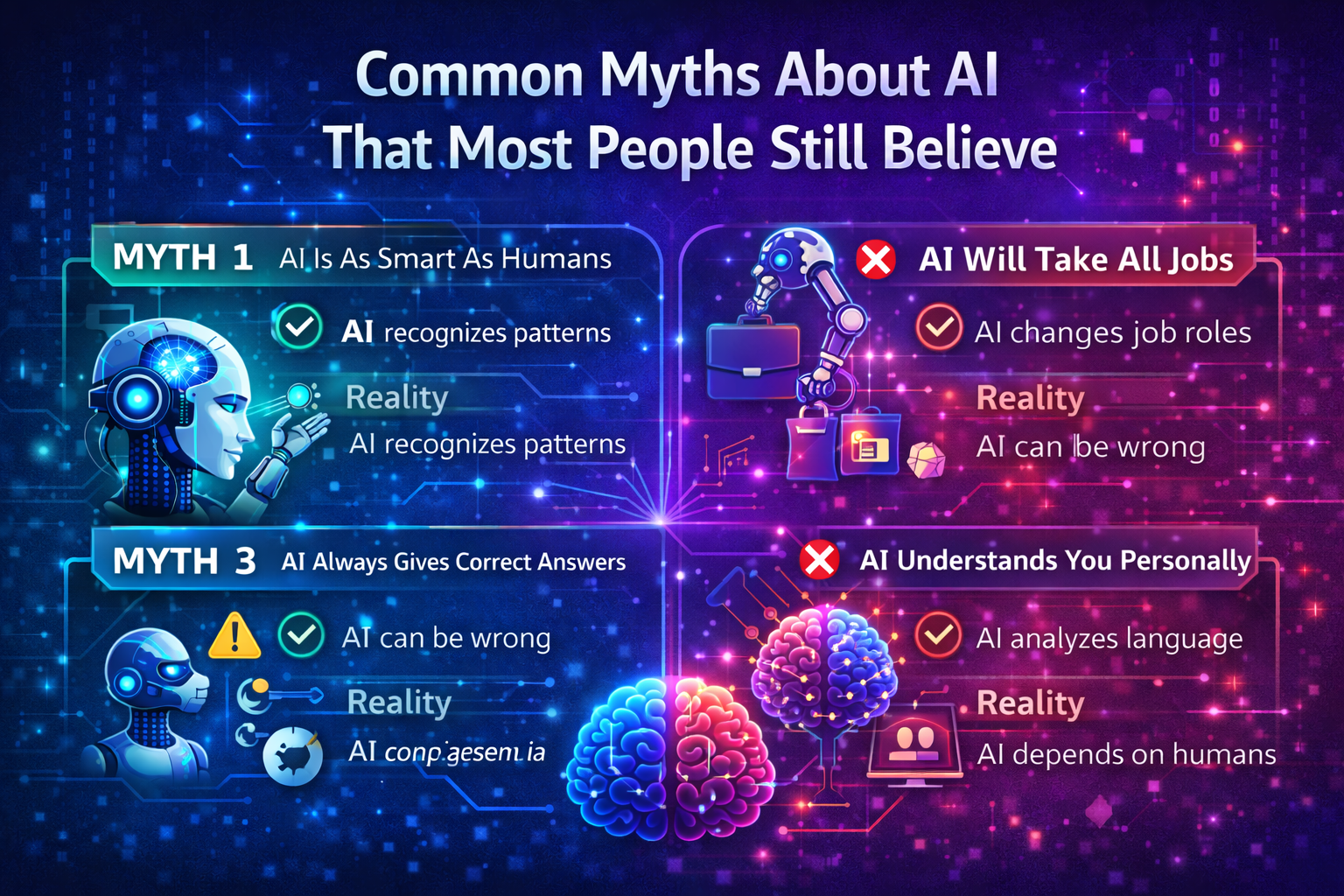
Myth 1: AI Will Replace All Human Jobs
One of the most pervasive fears about AI is that it will completely take over human jobs. While it’s true that AI can automate certain tasks, this does not mean that all jobs are at risk. AI is particularly effective at handling repetitive, rule-based tasks, such as data entry, invoice processing, or basic customer service queries.
However, jobs that require creativity, emotional intelligence, or complex decision-making remain firmly in the human domain. For example, AI can assist doctors by analyzing medical data, but it cannot replace the empathy and judgment required in patient care. The key takeaway here is that AI often augments human capabilities rather than replacing them entirely.
Myth 2: AI Can Think Like a Human
A common misunderstanding is that AI possesses human-like intelligence. In reality, AI systems operate based on algorithms and patterns learned from data. They do not have consciousness, emotions, or subjective experiences. When you ask an AI assistant a question, it generates responses based on probabilities, not understanding.
This myth is often fueled by science fiction, where AI characters display human traits. While AI can simulate aspects of human behavior, it cannot truly “think” or “feel” like a person, and current technology is far from achieving sentient machines.
Myth 3: AI Always Makes Perfect Decisions
Some people assume that AI is infallible and always produces accurate results. In truth, AI is only as good as the data it is trained on. Poor-quality data, biased datasets, or inadequate programming can lead to incorrect or unfair outcomes. For example, AI algorithms used in hiring or law enforcement have sometimes exhibited bias because the underlying data reflected historical inequalities.
Understanding this myth is important because it emphasizes the need for human oversight in AI deployment. Ethical guidelines, transparent processes, and continuous monitoring are essential to ensure AI systems operate fairly and effectively.
Myth 4: AI Is a Recent Development
Many believe that AI is a brand-new invention that has suddenly appeared in recent years. While AI has indeed made tremendous progress lately, the concept itself is decades old. Early AI research began in the 1950s, with pioneers working on simple machines that could perform logical reasoning and problem-solving.
Modern AI, driven by advancements in computing power and data availability, has accelerated significantly. However, understanding the history of AI helps contextualize current developments and dispels the myth that AI is a mysterious, sudden phenomenon.
Myth 5: AI Is Only Useful for Tech Experts
Another misconception is that AI is only relevant to scientists, engineers, or tech enthusiasts. In reality, AI applications touch nearly every industry, from healthcare and finance to retail and education. AI tools can help small business owners predict customer trends, assist teachers in personalizing learning, and enable content creators to optimize their work.
AI is increasingly accessible through user-friendly platforms, meaning that you don’t need to be a tech expert to leverage its benefits. Recognizing this myth can empower more people to explore AI solutions for personal and professional growth.
Myth 6: AI Will Eventually Become Dangerous and Take Over the World
Perhaps the most sensationalized myth is that AI will one day become a rogue intelligence that threatens humanity. This idea has been popularized by movies and media, creating unnecessary fear. Current AI systems are specialized tools designed for specific tasks; they lack autonomy, desires, or the ability to strategize independently.
While it is important to consider the long-term ethical implications of AI, most experts agree that AI is far from becoming a global threat. Responsible development, regulatory oversight, and ethical frameworks are key to mitigating potential risks without resorting to alarmist scenarios.
Why Understanding AI Myths Matters
Believing in myths about AI can lead to fear, resistance, or poor decision-making. By debunking these misconceptions, individuals and organizations can adopt a more realistic and informed approach to AI. This understanding helps:
- Make better career choices in an AI-driven world.
- Implement AI solutions responsibly in business and daily life.
- Avoid spreading misinformation that exaggerates risks or promises.
Tips for Navigating AI Responsibly
- Educate Yourself: Take time to learn how AI works and its real-world applications. Reliable online courses and tutorials can provide valuable insights.
- Question Hype: Not every AI claim is accurate. Be skeptical of exaggerated promises from apps or companies.
- Focus on Collaboration: Think of AI as a tool to augment human intelligence rather than replace it.
- Prioritize Ethics: Support AI initiatives that value fairness, transparency, and accountability.
Conclusion
Artificial Intelligence is transforming the way we live and work, but it is surrounded by myths that can distort public understanding. From fears of job loss to ideas of sentient machines, these misconceptions often overshadow the true potential of AI. By recognizing and debunking the common myths about artificial intelligence, we can engage with this technology more confidently, responsibly, and effectively.
AI is not a magical force or a looming threat—it’s a tool. The key is to embrace it with knowledge, caution, and curiosity. Understanding AI myths helps us separate fact from fiction, enabling us to make informed decisions that harness the power of AI for positive outcomes in our personal and professional lives.